When diving into the Valencia real estate market, whether you are looking for an investment opportunity or your future Mediterranean home, our advice is not to exclude properties in their original condition.
Often presented online with poor-quality photos and little visual appeal, these properties can hide enormous potential and become truly one-of-a-kind homes. Being able to look beyond the listing and recognize the good bones of a property is key to finding a place with real charm and character.
During the years following the recession, Valencia saw very little new construction for more than a decade, and only recently has development started to accelerate again. Nevertheless, the shortage of newly built and fully renovated properties, combined with the growing demand in recent years, has made it increasingly challenging for buyers to find the right home.
To give yourself more opportunities in the market, we recommend keeping an open mind during your property search and not being afraid of renovation projects. A property that requires substantial refurbishment could ultimately become the home you have always dreamed of.
In Valencia, the renovation process is neither quick nor simple. However, if you understand the steps involved and know how the process works, taking on a refurbishment project can be an incredibly rewarding decision. If you are still at an earlier stage, start with our guide on how to purchase a property in Valencia, then come back to the renovation side of the equation.
Why Renovate a Property in Valencia?
There can be many reasons to renovate a property — whether you are looking to upgrade your current home, searching for an investment opportunity, or creating your ultimate Spanish dream home.
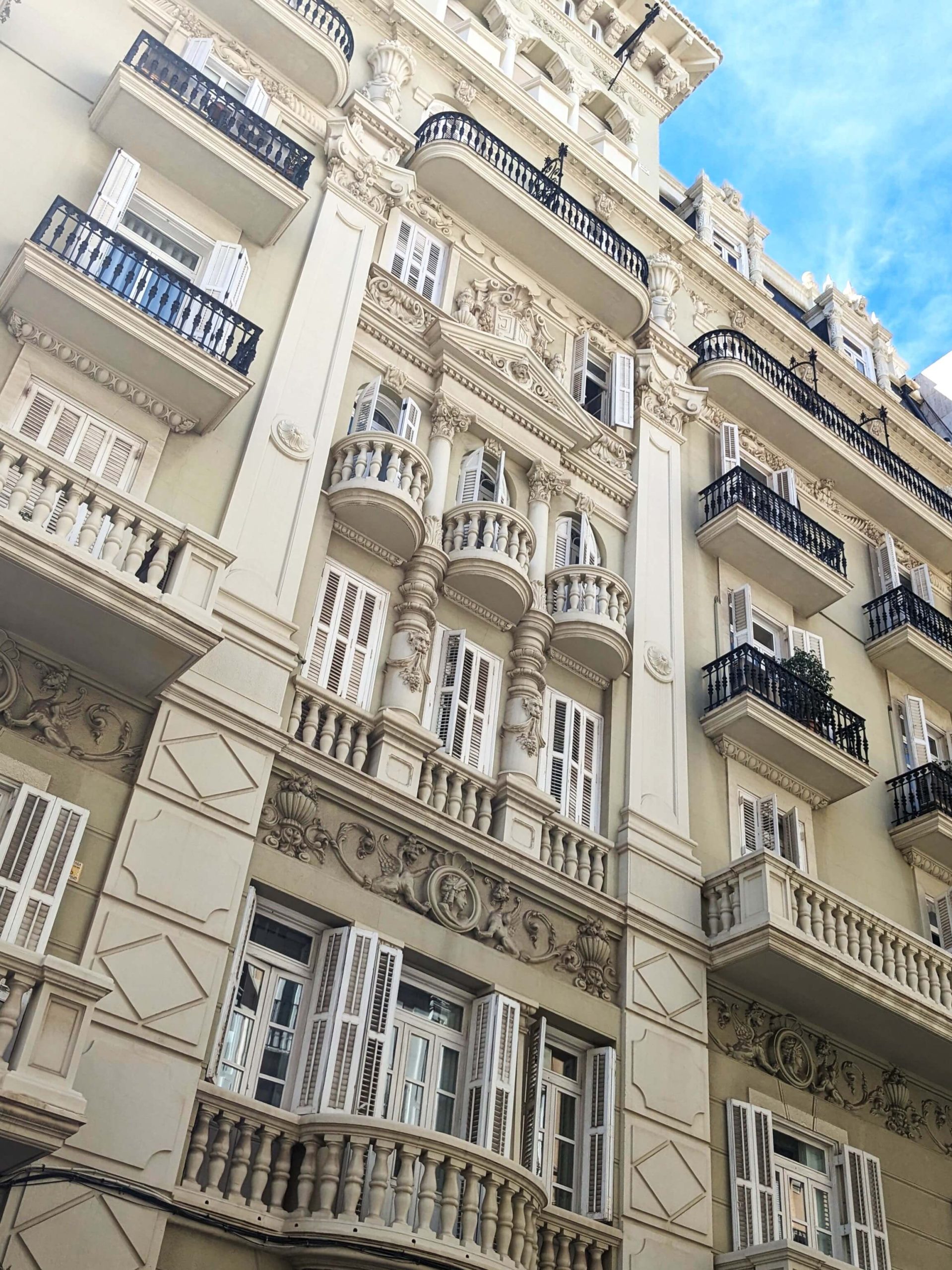
At Yes Valencia, we mostly work with clients who are searching for something truly special and personal. More often than not, they are looking for a home that combines historical charm with modern comfort and practicality.
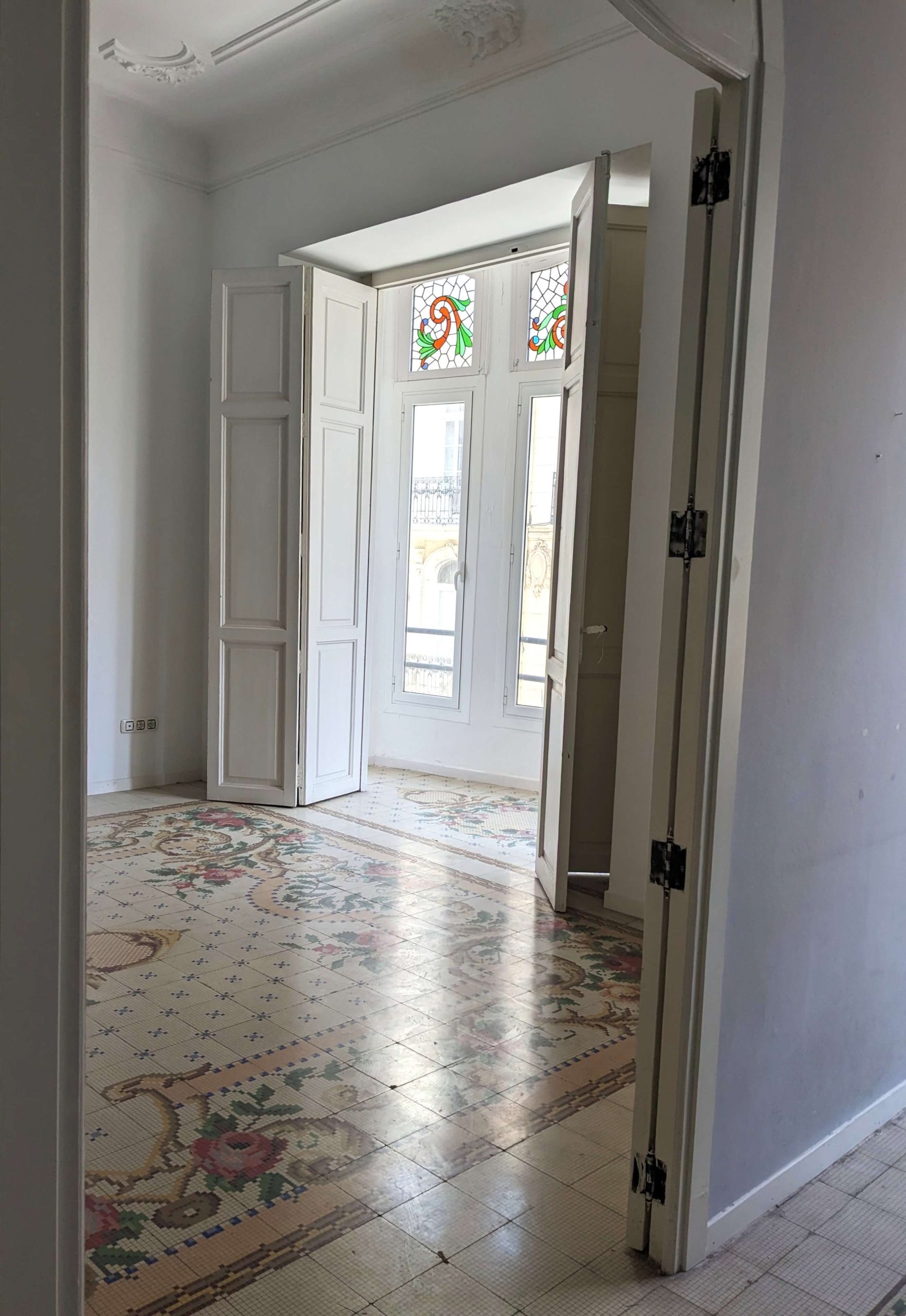
Spacious interiors, high ceilings, original mosaic floors, abundant natural light, outdoor living spaces, and beautiful historic facades — these are the features that define the dream of owning a character-filled Spanish home.
Quite often, you need to be able to visualize the property’s potential and imagine what it could become before deciding to move forward with the renovation.
Types of Renovation Projects
When talking about renovation, there are several types of projects you may come across.
A cosmetic renovation usually involves smaller upgrades such as updating the kitchen, bathrooms, flooring, or repainting the property. These projects are generally faster and simpler, and they typically do not require architects, major project approvals, or complex permits. In many cases, you can work directly with a contractor who can also assist with the necessary paperwork and permits.
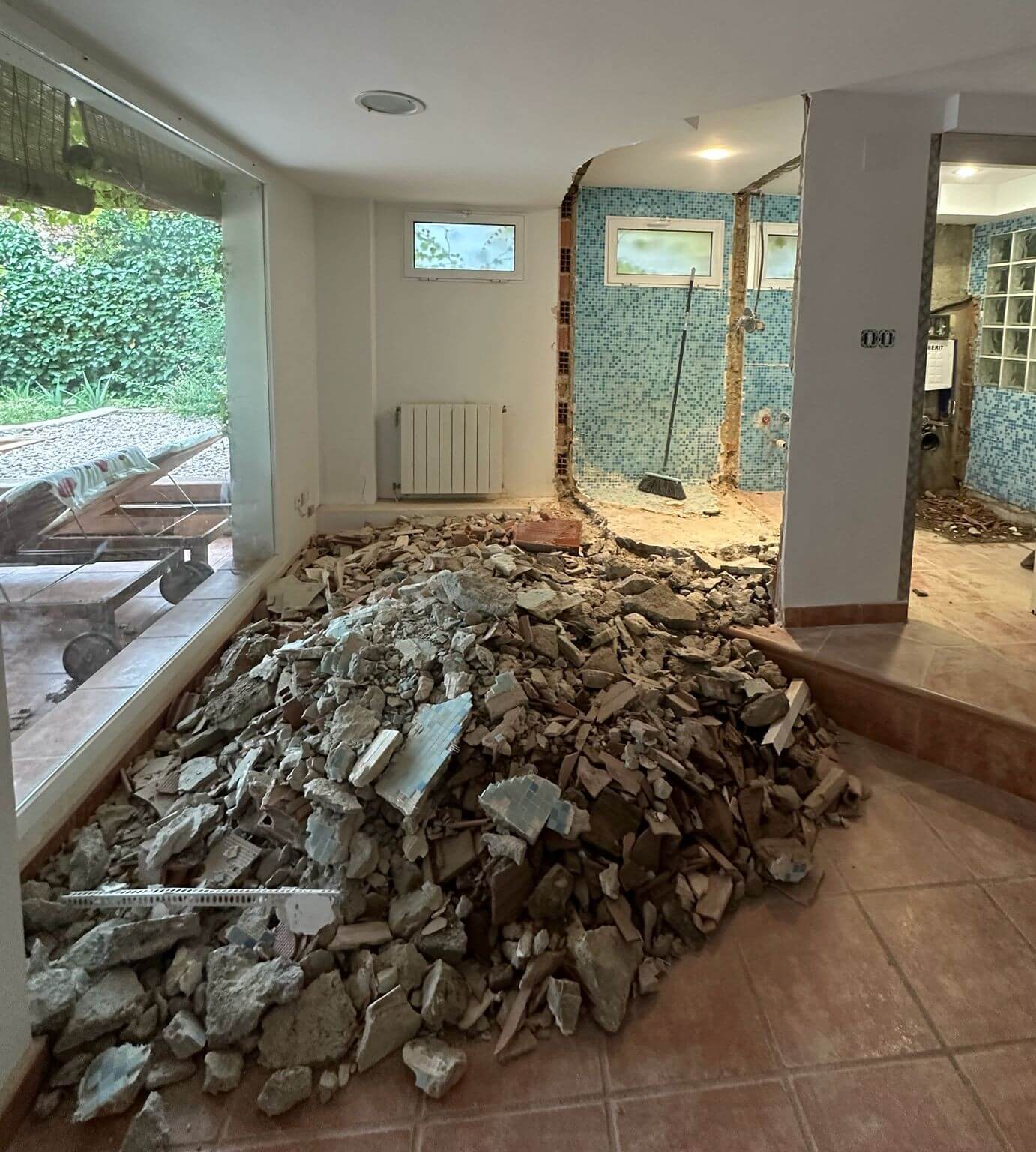
If, in addition to cosmetic improvements, you plan to replace the electrical system, plumbing, change dimensions of windows, set insulation, or modify the layout of the property, you are entering the realm of a full renovation. These projects require the involvement of multiple professionals, including architects, electricians, plumbers, and sometimes interior designers, depending on the scope of the work.
The most complex and time-consuming projects are historic renovations. While Valencia’s charming historic buildings offer incredible character and unique architectural features, they often come with additional challenges. Many of these properties are protected buildings, meaning that restoration work may require special permits and must comply with strict preservation regulations and architectural guidelines.
Average Renovation Costs in Valencia in 2026
Renovation costs in Valencia are typically calculated based on the square meterage of the property.
Light renovations generally range between €300–€600/m², while mid-range renovations usually cost between €700–€1,200/m². For high-end luxury renovations, prices often start at around €1,500/m² and can increase significantly depending on the level of customization and finishes selected.
It is also important to keep in mind that additional costs may apply depending on the scope and complexity of the project. These can include permit fees, structural modifications such as changing layouts or relocating staircases, the quality and origin of materials, imported finishes, and the characteristics of the building itself — including accessibility, elevator access, and logistical challenges during construction.
Step-by-Step Guide to Renovating Property in Valencia
Find the Right Property
If you have found the right property for your renovation project, it is essential to include several important steps in your due diligence process before purchasing.
We strongly recommend hiring an architect who can assist you from the very beginning. An architect will not only evaluate the structural condition of the property and building, but will also check with the local town hall whether the building is protected, subject to preservation regulations, or affected by any restrictions that could influence your renovation plans.
It is equally important to request and carefully review the community rules of the building. Make sure there are no specific regulations that could affect the scope of your renovation. Quite often, for example, terraces may be community-owned spaces assigned for private use, meaning modifications or structural changes may not be permitted.
Finally, make sure your numbers are realistic and well calculated. Assess the feasibility of the renovation project carefully and develop a clear understanding of the total investment required. Whether your goal is to create your future family home or maximize returns on an investment property, having a solid financial plan from the outset is essential.
Hire the Right Professionals
Depending on the scope of your renovation project, it is important to team up with the right professionals. If for light remodelling hiring the constructor is sufficient, for wide rage projects it is essential to have an architect on the board. You might choose to work with interior designer and in some legally challenging situations, you might want to get together with a lawyer as well.
Renovation Permits in Valencia
There are two main types of permits you may need when renovating a property in Valencia.
A minor works permit (licencia de obra menor) is intended for small-scale refurbishments that do not involve structural changes. This typically includes kitchen and bathroom updates without altering the layout, interior works such as smoothing or repainting walls, installing new flooring, and replacing doors or windows without changing their dimensions. These types of permits usually cost around €140, plus approximately 3% of the total renovation budget.
For major works (licencia de obra mayor), which involve structural intervention, layout modifications, change of use (for example, from commercial to residential), or work on protected buildings, a full renovation project must be submitted and approved. In these cases, a detailed architectural project is required. Permit costs vary but generally include a municipal fee of around 4% of the total budget. The approval process typically takes between 1 and 3 months, depending on the complexity of the project and the municipality.
Construction Phase
Be aware that a refurbishment project in Valencia can take anywhere from a couple of months to over a year to complete. The timeline depends on several factors, including the speed of permit approvals, the scope and complexity of the works, labour availability, material supply, and the delivery time of specially ordered items. Unexpected force majeure events, for such as COVID-19 disruptions or severe weather events like DANA flooding, can also cause delays.
It is important to remain realistic about timelines and to be patient throughout the process. Delays in completion are relatively common in Valencia’s renovation sector. Maintaining clear and consistent communication with your project team is essential in order to stay informed about any challenges or adjustments along the way.
Final Inspection and Construction Guarantees
Once the works are completed, you should formally agree on the handover date of your renovated property.
Under Spanish law, article 17, (LOE – Ley de Ordenación de la Edificación- ) , construction warranties apply as follows:
- 10 years for structural defects (such as beams, foundations, and load-bearing walls)
- 3 years for defects affecting habitability, including insulation, plumbing, and electrical systems
- 1 year for finishing defects such as masonry, paintwork, and installed materials
It is essential to keep all invoices, contracts, and project documentation safely stored, as these will be required in case any claims or warranty issues arise.
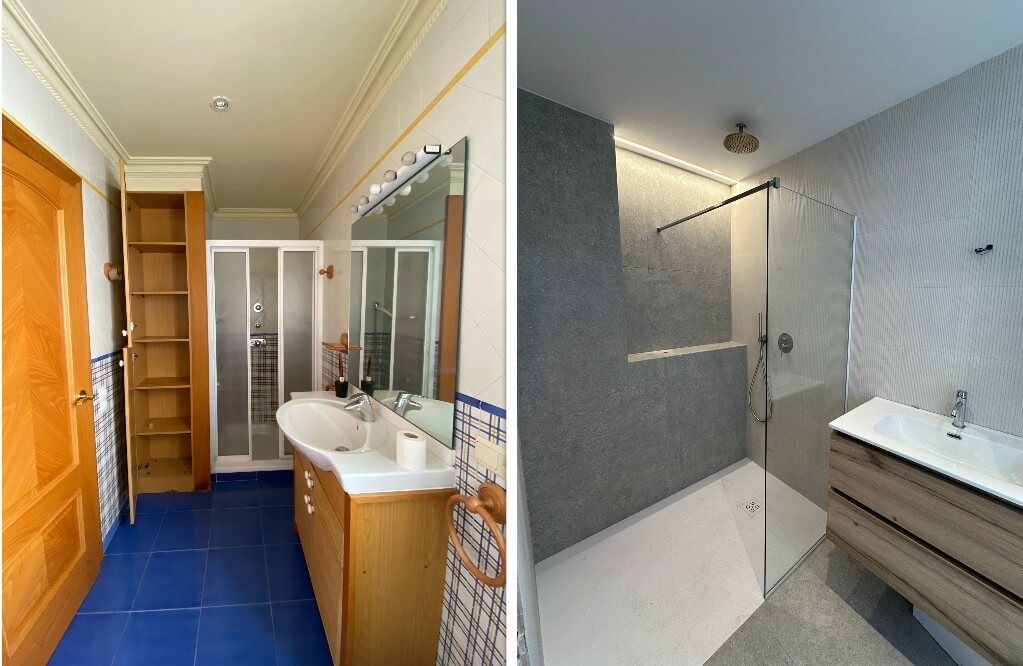
Before and after. A remodeling project by Builder Brothers in Valencia.
While accompanying our clients through the purchase process, we ensure that the property aligns with their future renovation plans and overall vision.
The most common mistakes to avoid
Underestimating timelines
One of the most common mistakes is underestimating how long construction works actually take. In reality, renovations almost always take longer than expected. There are many influencing factors, including permit approvals, labour shortages, unexpected supplier delays, and other logistical challenges. Neither your contractor nor your architect can foresee every scenario, and in many cases, delays are caused by factors outside of their control.
The “good and cheap” illusion
Remember the golden rule: good and cheap does not exist. Working with a knowledgeable and experienced team is essential to avoid future surprises or poor-quality work. Choosing the right professionals may seem more expensive initially, but it will save you significant time, money, and stress in the long run.
Ignoring permits
Ignoring permits is never a good way to save money. If neighbours become aware of unlicensed renovation works due to noise or dust, they may report it to the local authorities. This can result in fines and an immediate suspension of the project. It is certainly not the ideal way to meet your new neighbours.
Skipping Technical Inspections
To minimise risks, always carry out a technical inspection of the property before purchasing. Engage an architect early in the process and discuss your renovation plans to ensure your vision is technically and legally feasible.
Over-Renovating for the Area
If you are buying the property as an investment, be careful not to over-renovate for the area. A €1M renovation in a low-demand neighbourhood will not necessarily generate a good return. This is why it is essential to be properly advised throughout your search and decision-making process.
Misunderstanding building rules
Understanding building regulations is also crucial. Make sure they are fully aligned with your renovation plans before committing to a purchase.
You can check for a video version in our YouTube channel here
Our Advice for Making Your Home Truly Comfortable
Create outdoor space whenever possible
Even if your property does not have a balcony, pay attention to the galleries, which are usually located at the back of the apartment near the kitchen. Many buyers do not realise that, in some cases, it is possible to open these spaces up and transform them into a pleasant balcony area, creating valuable outdoor living space within the home.
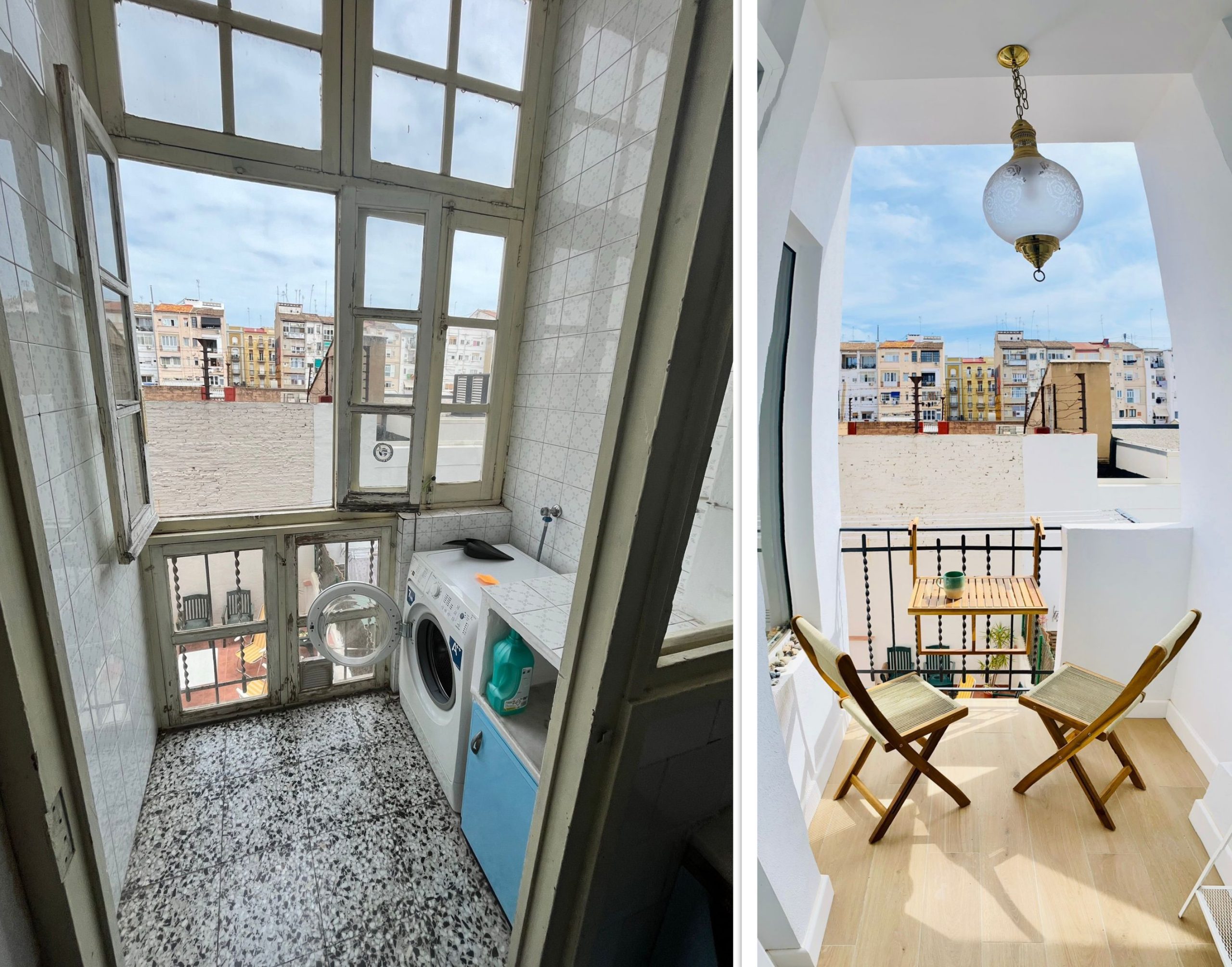
Backside galeria converted into a balcony — before and after.
Invest in proper insulation
Valencia is a southern Mediterranean city and many older buildings have very thin walls and poor insulation. Adding perimeter or full insulation can significantly improve both acoustic comfort and energy efficiency, helping to keep the apartment cooler in summer and warmer in winter.
Do not underestimate heating and air conditioning
Everyone knows that Valencia’s summers can be intense, making air conditioning an absolute necessity. However, many newcomers underestimate the winters. During colder months, indoor temperatures can easily drop to around 15°C, and the humidity often makes it feel even colder. Whether you choose central air conditioning, individual units, gas heating, or electric radiators, investing in a proper climate control system is one of the improvements you are least likely to regret.
Install a water softener
Valencia’s tap water is known for being very hard due to its high limescale content. While the water is perfectly safe to use, hard water can affect your skin, hair, household appliances, and plumbing over time. Installing a water softener is a relatively small investment that can make a noticeable difference in everyday comfort and maintenance.
Consider a water filtration system
As mentioned above, Valencia’s tap water is not always the most pleasant for drinking. Installing an osmosis or water filtration system allows you to have clean drinking water directly at home, while also reducing the need to buy and carry plastic water bottles.
Final thoughts
Valencia continues to attract both local and international buyers. For many years, there were very few new-build developments and remodelling, meaning that a large proportion of the housing stock remains in its original condition.
If you are looking for your dream home in Valencia — a place where history meets practicality and comfort — you will often need to consider properties that require renovation.
Although the process is not always easy, there are many successful stories. The key is to work with trustworthy professionals who can guide and manage your project from start to finish.
And remember — patience is essential when renovating property in Valencia.
If you would like help finding a property with the right bones for a renovation project, take a look at our property finder service — we screen listings, assess condition, and accompany you through the purchase.


Leave a Reply